


Unser Büro vertritt die Schweizer Bahá’í-Gemeinde in ihren Beziehungen zu Regierung, Medien und Zivilgesellschaft.
Das Büro für Aussenbeziehungen externe Angelegenheiten möchte zum Wohlergehen und zur Weiterentwicklung der Schweizer Gesellschaft beitragen, indem es auf die Prinzipien des Bahá’í-Glaubens sowie die Erfahrungen zurückgreift, die während einem Jahrhundert der Bemühungen zum Aufbau der Gemeinde in der Schweiz aber auch weltweit gemacht werden konnten.
Wir arbeiten mit Regierungsinstitutionen, zivilgesellschaftlichen Organisationen, Universitäten, Glaubensgemeinschaften und Anderen zusammen.
Unser Büro wurde vom Nationalen Geistigen Rat der Bahá’í der Schweiz beauftragt, sich auf nationaler Ebene an folgenden Diskussionen zu beteiligen:
- die Stärkung der Jugend in der Gesellschaft als “Treuhänder der Zukunft”
- die Beseitigung von Rassismus
- sozialer Zusammenhalt
- die Förderung von Frauen
- Religion in der Gesellschaft und interreligiöse Einheit
- Frieden und Menschenrechte
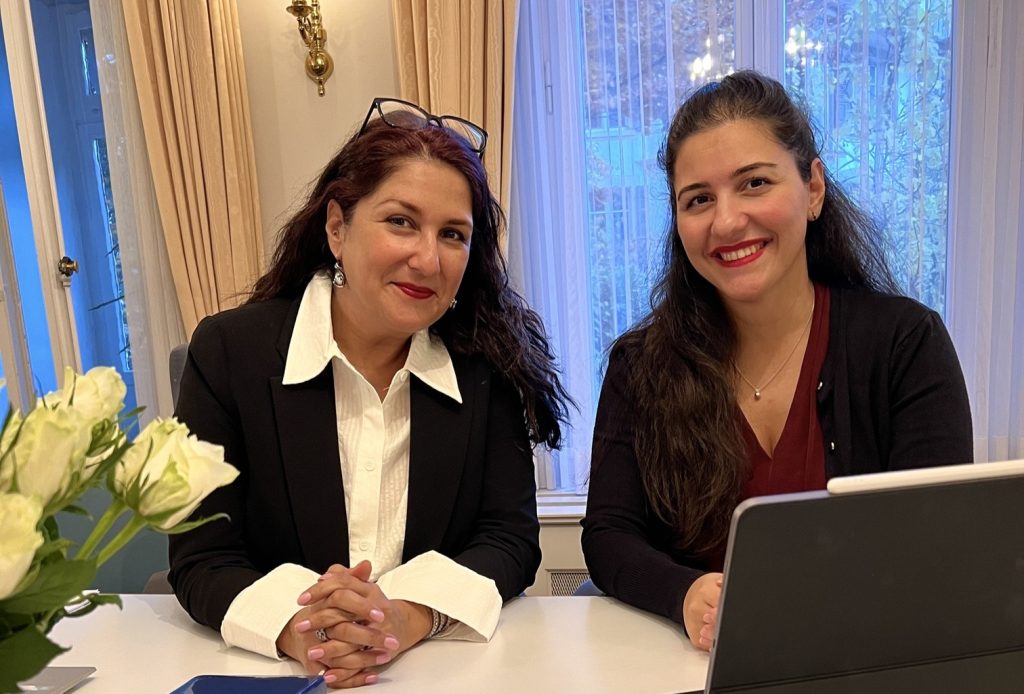
Vertreter des Büros bringen Bahá’í-Perspektiven in öffentliche Diskussionen ein – durch Podiumsdiskussionen, Interviews und die Veröffentlichung von Artikeln. Weiterhin werden Möglichkeiten erarbeitet, die zur Weiterbildung einladen, den Dialog fördern sowie zu gemeinsam angelegtem Handeln aufrufen – vor allem, was Angelegenheiten angeht, die gesamtschweizerisch von Bedeutung und Interesse sind.
Unser Büro setzt sich weiterhin für das Recht auf Religions- und Glaubensfreiheit für Bahá’í und anderen religiösen Minderheiten weltweit ein, so unter anderem im Iran, in Ägypten, in Katar und dem Jemen. Wir arbeiten an diesen Themen direkt mit der Bahá’í International Community (BIC) und unseren weltweit angesiedelten Schwesterbüros.
OEA News
Beitrag zu einer gemeinsamen zivilgesellschaftlichen Stellungnahme
Im März 2026 wirkte das Büro für Außenbeziehungen an der Erarbeitung einer gemeinsamen zivilgesellschaftlichen Stellungnahme mit, die dem Schweizer Staatssekretariat für Sicherheitspolitik (SEPOS) im Kontext der geplanten neuen Schweizer Sicherheitspolitik vorgelegt wurde.
Die Stellungnahme wurde von der zivilgesellschaftlichen Plattform KOFF – in der die Bahá’í‑Gemeinde der Schweiz aktives Mitglied ist – nach Konsultationen zwischen Organisationen aus den Bereichen Frieden und Menschenrechte erstellt und eingereicht.
Durch die Teilnahme an diesen Konsultationen brachte sich das Büro in die Diskussionen über präventionsorientierte Ansätze als Kernelemente der Schweizer Sicherheitspolitik ein. Die gemeinsame Stellungnahme fordert eine systematischere Einbeziehung einer menschenzentrierten Perspektive („menschliche Sicherheit“), die den Fokus auf die Sicherheit, die Rechte und das Wohlergehen von Einzelpersonen und Gemeinschaften legt.
Dieser Ansatz steht im Einklang mit der Vision von Bahá’u’lláh: „Das Wohlergehen der Menschheit, ihr Friede und ihre Sicherheit sind unerreichbar, solange nicht ihre Einheit fest begründet ist.“
Parlamentarische Anfrage
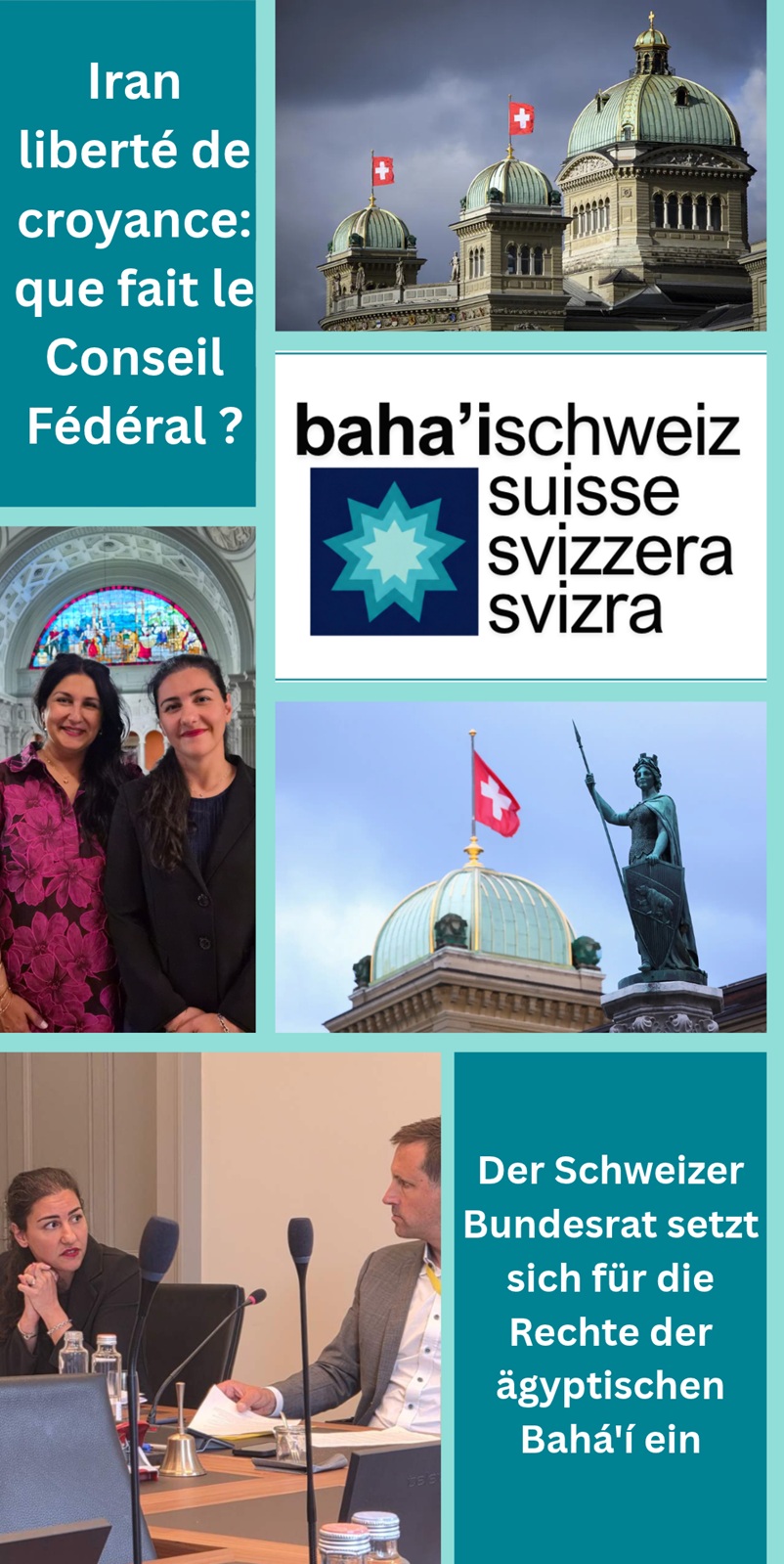
Das Büro für Außenbeziehungen baut seine Beziehungen zu Schweizer Regierungsvertretern und Parlamentariern weiter aus, um das Bewusstsein für die Diskriminierung religiöser Minderheiten in Ägypten zu schärfen. Dieses Engagement trug zu einer Interpellation bei, die während der Sommersession des Schweizer Parlaments eingereicht wurde. Darin wird thematisiert, dass Ägypten der Bahá’í‑Gemeinschaft den rechtlichen Status verweigert. Dies hat zur Folge, dass Kinder keinen rechtlichen Status, keine Staatsangehörigkeit, kein Aufenthaltsrecht und keinen Zugang zu Bildung haben; zudem wird ihnen das Recht auf eine würdige Bestattung vorenthalten. Das Büro setzte sich zudem dafür ein, auch die Situation von Ahmadis und koptischen Christen – die mit ähnlicher Diskriminierung konfrontiert sind – in die Debatte einzubeziehen.
Die Interpellation richtete vier Fragen an den Bundesrat: Sie erkundigte sich danach, wie die Schweiz diese Menschenrechtsverletzungen einstuft und welche Maßnahmen sie ergreift, um die Religionsfreiheit zu verteidigen und gefährdete Minderheiten zu schützen. In seiner Antwort räumte der Bundesrat ein, dass die religiöse Diskriminierung in Ägypten ein ernstes Problem darstellt, und erläuterte sein diesbezügliches Engagement – etwa durch multilaterale Empfehlungen, öffentliche Stellungnahmen sowie im Rahmen der Entwicklungszusammenarbeit.
Dass diese Anliegen im Parlament zur Sprache gebracht wurden, ist ein wichtiger Schritt, um die außenpolitische Reaktion der Schweiz zu stärken und die Rechte der betroffenen Gemeinschaften zu fördern.
Im Jahr 2026 wurden im Schweizer Parlament drei parlamentarische Anfragen sowie zwei Interpellationen zur Situation der Bahá’í‑Minderheit eingereicht.
Zum Dialog beitragen
Das Büro für Außenbeziehungen leistete einen Beitrag zum gesellschaftlichen Diskurs durch seine Teilnahme an der Veranstaltung „Sommersonnenwende in Caux“ (The Summer Solstice at Caux) im Caux Palace. Dort wurden Überlegungen zur Menschenwürde und den Grundlagen eines friedlichen Zusammenlebens angestellt. Die Zusammenkunft, die Teilnehmende mit unterschiedlichstem kulturellem, religiösem und beruflichem Hintergrund vereinte, bildete zudem den Auftakt für das jährlich stattfindende „Caux Democracy Forum“.
Der Beitrag des Büros beleuchtete, wie wichtig es ist, die jedem Menschen innewohnende Würde als Fundament für den Aufbau friedlicher und zusammenhaltender Gesellschaften anzuerkennen. Es wurde hervorgehoben, dass dauerhafter Frieden mehr erfordert als nur institutionelle Rahmenbedingungen; er setzt einen Wandel der Haltungen sowie die Pflege von Beziehungen voraus, die auf gegenseitigem Respekt, Verständnis und Solidarität beruhen. Diese Überlegungen stützen sich auf das Bahá’í‑Prinzip der Einheit der Menschheit und dessen Bedeutung für die Art und Weise, wie Einzelpersonen und Gemeinschaften über soziale, kulturelle und religiöse Grenzen hinweg miteinander in Beziehung treten.
Für Updates zu den Aktivitäten des Büros folgen Sie diesem Raum und interagieren Sie mit uns in den sozialen Medien.
Melden Sie sich für unseren Newsletter an, um Updates zur Situation der Bahá’í im Iran, Ägypten, Katar und Jemen zu erhalten.

Media fact sheet
Name of the religion: The Bahá’í Faith. ‘Bahaïsm’ is incorrect.
Origins: The Bahá’í Faith is an independent world religion. It is not a sect or denomination of Islam or any other religion.
Terminology: A member is called a Bahá’í (plural: Bahá’ís). It is also correct to say that someone is a “member of the Bahá’í Faith,” a “follower of the Bahá’í Faith,” a “follower of Bahá’u’llah,” or a member of the Bahá’í community of a given locality.
Founder of the Bahá’í Faith: Bahá’u’llah – the name is Arabic for “Glory of God” – was born in 1817 in Tehran, Iran, and passed away in 1892 in Acre in the Holy Land. The coming of Bahá’u’llah was announced by the Báb, in Arabic, “The Gate” (1819–1850), who is also considered by Bahá’ís to be a divine Messenger.
Year of founding: 1844. The first announcement by the Báb of the new religion came in 1844.
Year of arrival in Switzerland: 1903.
Administration: There is no clergy in the Bahá’í Faith. There is an administrative order elected democratically.
Internationally: The Universal House of Justice, a nine-member institution elected every five years with its seat at the Bahá’í World Centre in Haifa, Israel.
Nationally: The National Spiritual Assembly of the Bahá’ís of Switzerland and Leichtenstein, a nine-member body elected annually, oversees the affairs of the Bahá’í Faith in these two countries.
Locally: 18 annually elected Local Spiritual Assemblies oversee local affairs throughout Switzerland.
Elections are conducted according to guidelines that prohibit nominations and campaigning, and instead require those casting ballots to vote, with a prayerful attitude, for individuals “of selfless devotion, of a well-trained mind, of recognised ability and mature experience.”
Decision making: Contention is avoided in favour of a consensus decision making process called consultation. There is no clergy. There are no rituals, robes or special clothing.
Funds: Bahá’í activities and properties are supported by the voluntary contributions of registered Bahá’ís only.
Statistics:
Number of Bahá’ís in the world: more than 5 million
Number of Bahá’ís in Switzerland: approximately 1200
Number of Local Spiritual Assemblies and groups in Switzerland: 35+
Description of the religion and key beliefs: The Bahá’í Faith is a modern, independent, monotheistic religion established in virtually every country of the world. A central theme of the Bahá’í Faith is that humanity is one family, bound together in a common destiny under one Creater. Bahá’ís believe that the world’s major religions represent unfolding chapters in God’s teachings for humankind, and that the writings of Bahá’u’llah represent God’s guidance for this age of humanity.
Key Bahá’í principles:
- Oneness of Humanity: The fundamental belief that all humans belong to a single, global family, cited in the Bahá’í Writings as “leaves of one tree”, “the waves of one sea”, or “the flowers of one garden”.
- Elimination of Prejudice: Actively overcoming all forms of bias, including racial, national, religious, and class-based prejudices.
- Independent Investigation of Truth: Each individual must search for truth for themselves, rather than blindly following tradition or dogma.
Harmony of Science and Religion: Science and religion cannot contradict each other, as they are two complementary systems of knowledge. - Equality of Rights of Women and Men: Women and men are equal, cited in the Bahá’í Writings as the “two wings” upon which humanity can soar.
- Universal Education: Education is a universal necessity, and compulsory education is encouraged.
- Universal Auxiliary Language: Adoption of a universal secondary language to facilitate global communication and unity.
- Abolition of Extreme Wealth and Poverty: Promoting economic justice and reducing the disparity between the rich and poor.
- Religion as a Source of Unity: Religion should promote harmony; if it causes discord, it is not serving its true purpose.
Establishment of World Peace: Advocating for a global, sustainable peace system.
Some Baha’i laws:
- strict obedience to the laws of the land
- no participation in partisan politics
- encouragement of community and religious harmony
- prohibition of using alcohol and other mind-altering drugs
- prohibition of backbiting (gossip)
Daily life:
- Daily prayer.
- Fasting by adults for 19 days in March from sunrise to sunset.
- Meeting regularly at the Nineteen Day Feast (the term refers to a spiritual “feast” of prayers, consultation and fellowship). In most communitieis, Bahá’ís gather in members’ homes.
- Observing nine holy days during the calendar year on which work should be suspended.
- Participating in community building activities: public devotional gatherings, children’s classes, empowerment programs for youth, and study circles.
Worldwide:
- The spiritual and administrative centre of the Bahá’í Faith is permanently established in the Acre-Haifa area of northern Israel, in accordance with the instructions of Bahá’u’llah, who arrived as an exile in the Holy Land in 1868.
- The Bahá’í Faith is established in virtually every country of the world.
- The Bahá’í International Community has been registered with the United Nations as a non-governmental organisation since 1948.
- There are eight continental Bahá’í Houses of Worship – in Australia, Chile, Germany, India, Panama, Samoa, Uganda, and the United States.
- The country with the most Bahá’ís is India, with over a million Bahá’ís.
- In Iran, where the Bahá’í Faith originated, there are now about 300,000 Bahá’ís, constituting the largest non-Muslim religious minority in that country.